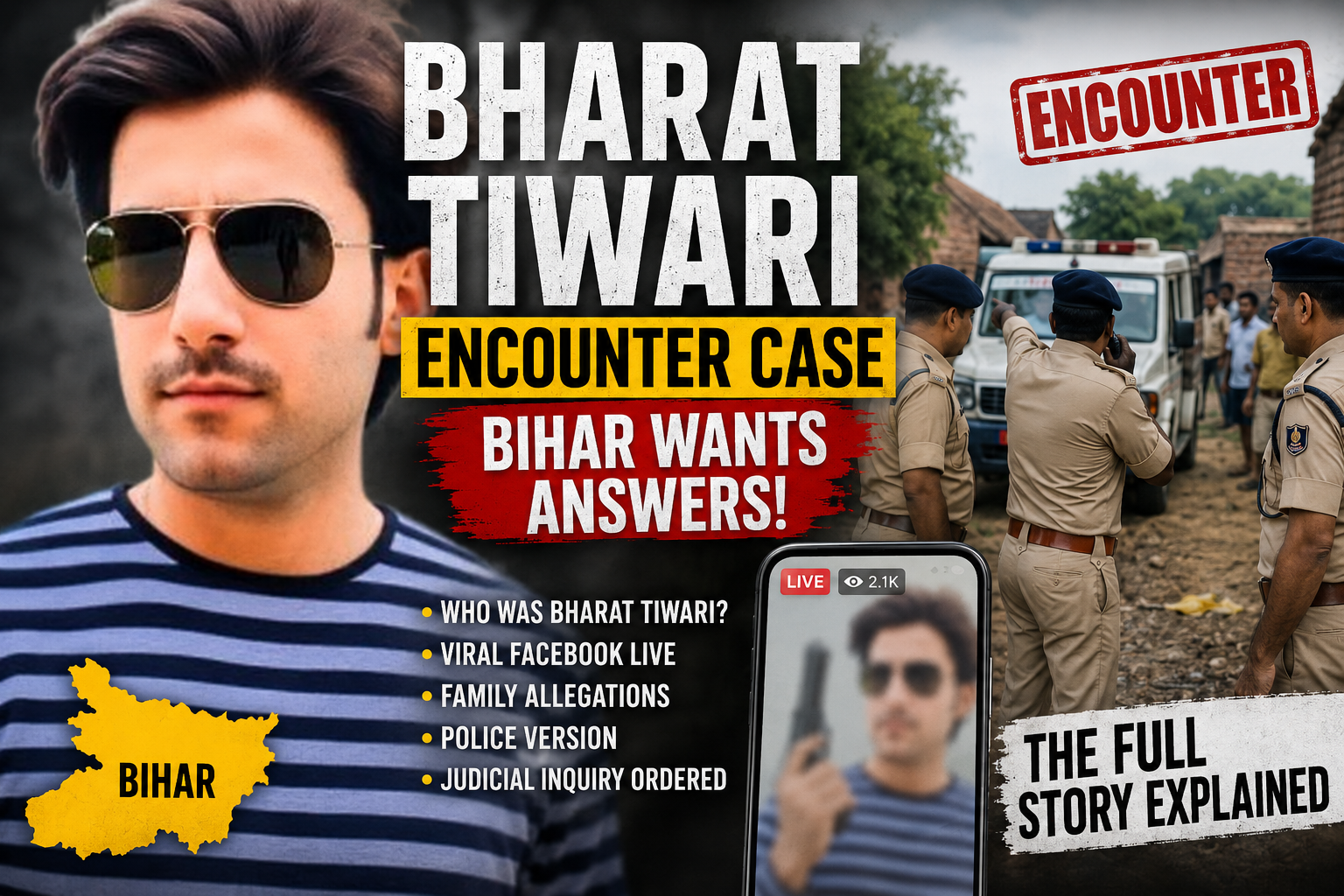
The death of Bharat Tiwari in a police encounter in Bihar has become one of the most discussed and controversial incidents in India in recent weeks. What began as a police operation in Bhojpur district quickly turned into a national debate about police accountability, encounter procedures, and the role of social media in documenting real-time events.
Who Was Bharat Tiwari?
Bharat Bhushan Tiwari, a resident of Bilauti village in Bihar’s Bhojpur district, was known locally for raising issues related to flood displacement and public welfare. Family members and supporters describe him as a social activist who frequently spoke about problems faced by villagers.
However, authorities claimed that Tiwari was carrying an illegal firearm and had uploaded videos displaying the weapon, prompting police action.
The Day of the Incident
On June 17, 2026, Bihar Police and STF personnel reached Bilauti village after receiving information regarding Tiwari’s activities.
As officers surrounded the area, Bharat Tiwari started a Facebook Live session. The livestream showed him carrying a pistol while speaking about local issues and interacting with police personnel from a distance.
The video quickly spread across social media platforms, drawing thousands of viewers.
What happened afterward remains the center of the controversy.
Police Version
According to police officials, Bharat Tiwari posed a threat during the operation. Authorities stated that officers acted in self-defense after the situation escalated, leading to an encounter in which Tiwari was seriously injured.
He was later shifted to a hospital for treatment but succumbed to his injuries.
Family’s Allegations
The family strongly disputes the official version.
Relatives claim that Bharat Tiwari had surrendered and thrown away his weapon before shots were fired. They allege that the use of lethal force was unjustified and have demanded an independent investigation into the encounter.
These allegations gained significant attention after clips from the Facebook Live broadcast went viral online.
Public Outrage and Protests
Following Tiwari’s death, protests erupted in several parts of Bihar. Supporters and local residents demanded accountability and questioned whether standard encounter guidelines had been followed.
Road blockades, demonstrations, and social media campaigns amplified calls for a transparent investigation.
The case soon evolved from a local law-and-order issue into a major political controversy.
Political Reactions
Leaders from multiple political parties questioned the circumstances surrounding the encounter. Former police officials also raised concerns and called for a detailed inquiry into the actions of the officers involved.
The incident triggered intense debate about encounter culture, police reforms, and the use of force in sensitive situations.
Judicial Inquiry Ordered
Amid growing pressure, Bihar Chief Minister Samrat Choudhary ordered a judicial inquiry into the encounter.
The investigation is expected to examine:
- Whether Bharat Tiwari had surrendered before being shot
- Whether police followed established encounter guidelines
- The sequence of events leading to the firing
- Video and forensic evidence related to the case
- Accountability of officials involved in the operation
The findings of the inquiry are expected to play a crucial role in determining what actually happened during the encounter.
Why the Case Matters
The Bharat Tiwari case has attracted national attention because it combines several issues that frequently spark public concern:
- Police encounters and accountability
- Human rights and due process
- The influence of viral social media footage
- Public trust in law enforcement
- Transparency in investigations
As the judicial inquiry continues, many key questions remain unanswered.
Conclusion
The Bharat Tiwari encounter case is no longer just a local incident from Bihar. It has become a national conversation about justice, accountability, and the role of law enforcement in a democratic society.
While police maintain that their actions were necessary, the family’s allegations and the widespread public response have ensured that the case remains under intense scrutiny.
The final conclusions of the judicial inquiry will likely determine how this incident is remembered and whether it leads to broader discussions about policing and encounter procedures in India.